Quick Summary
If you’re a homebuilder looking to create or improve your website, this checklist breaks down the key design and content elements that help you impress visitors and turn them into leads. It covers making a strong first impression with a clear brand identity, mobile-friendly navigation, high-quality visuals and floor plan galleries, strategic calls-to-action, lead-capture tools, SEO and blog content, and legal/technical essentials like site speed and compliance—so your site looks professional, works well on every device, and supports business growth.
Table of Contents
A website makes a first impression on your potential clients. Your client’s decision is based on how simple and functional a website is. Due to the advancement in digital technology, people are now using websites to browse, compare, and make decisions rather than just flipping through magazines and roaming the neighbourhoods. If your website is not providing what they need, they immediately shift to your competitor’s website. Your website operates 24/7, showcasing your best builds to clients at all times. So, it needs to be seamless and visually appealing to them. In this article, we will emphasise the homebuilder website design checklist to stand out from your competitors and turn visitors into leads. Let’s get started!
Checklist for Your Homebuilder Website Design
1. First Impressions and Online Credibility
Research shows that a user makes their decision about a product within 0.05 seconds. That’s very little time to make any decisions. Therefore, homebuilders need to design their homepage in a way that clearly explains the brand and its offerings, while maintaining a fast loading time. Maintaining an old or outdated website will make you seem behind the times. Whereas, a modern and clean website indicates that you care about quality and precision in your website, as you do in your builds.
Your website should show the type of work you do. If you are building modern and luxurious homes, your website should be sleek and professional. If you are looking for affordable homes, focus on functionality and ease of understanding. The website should inform users about the type of properties you build.
2. Clear Branding and Visual Identity

Consistent Logo and Color Palette
For every brand, there should be a visual identity. Without it, your business feels incomplete. Ensure that your website features a professionally designed logo on every page. The top left corner is the most common place where websites usually place their logos. Also, ensure that the colour palette complements your brand and limit it to no more than 3-4 colours.
No matter the type of style you choose, your colours should resonate with your customers. If you are dealing with eco-friendly homes, earthy tones look great. Whereas, if you are into modern and sleek homes, black, grey, and white are the best suits. Whatever you’re into, maintain consistency and ensure that every background, button, and font matches your colour palette.
Typography and Brand Personality
Most of us assume that typography is not that important, but it plays a major role in how people see your brand. Use serif fonts for a classy and elegant feel, while sans-serif fonts convey a modern look. Do not overuse fonts; just 2-3 types are enough to maintain a clean and professional look. Follow a visual hierarchy in using font sizes so that users can easily assess the content and remain engaged for a longer period.
Remember that your website should tell a story about who you are as a builder. Everything on the website should work together and show your style. Do not just show them the pictures of the homes; rather, show them what it’s like to live in them.
3. Mobile Responsiveness
Importance of Mobile-First Design
Most people in today’s fast-paced world use mobile devices to access the internet. It is said that over 64% of website traffic comes from mobile devices. Ensure that your builder’s website is optimized for mobile devices to avoid leaving any potential leads behind. Optimizing for mobile ensures that your website’s content is both visually appealing and accessible, regardless of the device’s screen size.
In mobile optimization, the content no longer requires zooming or pinching to be viewed. It will be the same as if you were experiencing it from a desktop. Platforms like WordPress offer responsive templates, but it’s best not to rely on them completely. Test them manually to ensure that everything looks right.
Cross-Device Compatibility Testing
Not everyone uses the same browser or devices. Some users prefer Safari, while others prefer Chrome, depending on their personal preference. So, test on different browsers and devices to detect any design issues or layout breakages. Tools like BrowserStack or Google Mobile Friendly Test make your task easier. Poor responsiveness or broken elements can disappoint the user. So, check load times, images, buttons, and the scroll behaviour.
4. User-Friendly Navigation
Logical Menu Structure
Users do not want to waste their time on your website looking for their needs. Instead, they want it to be easily understandable. The main menu should be clear and simply organised. Common menu items for a homebuilder website include: Home, About Us, Communities, Floor Plans, Gallery, Blog, and Contact. Do not overload your menu. Users should reach their targeted page within 2-3 clicks. Use simple terms.
If your website is larger, consider adding breadcrumbs to make it user-friendly, allowing users to easily navigate back to previous pages without needing to use the back button.
Sticky Navigation and CTAs
A sticky navigation bar is particularly helpful for users. It has important links, such as “Get a Quote” or “Schedule a Tour,” that are always visible to users, allowing them to take action. Additionally, CTA buttons should be placed strategically on your pages, rather than simply dumping them at the bottom.
5. High-Quality Visual Content
Use of Professional Photos and Videos
Visually appealing images are important for your website. If you are showcasing your builds, using high-quality images is essential rather than relying on grainy or outdated ones. Investing in professional photography or videography can help showcase your home in the best possible way. Use full-width banners, a gallery with completed projects, and videos of the communities.
An effective way to show your home’s video walkthroughs. Users imagine themselves while watching those walkthrough videos with subtle background music.
Virtual Tours and Interactive Galleries
Buyers can access your homes if your website has virtual tour videos. Leverage tools like “Matterport” to create 3D walkthroughs of your homes. Use interactive image galleries. Let them filter properties by room type or style. Add captions and descriptions of each property available on your website. Ensure that the images are compressed and optimised for better loading times.
6. Compelling Homepage Elements
Eye-Catching Hero Section
The homepage is the hero section of your website, and it must meet the user’s expectations. The home page should feature the best builds in full-width image or video form, accompanied by a powerful headline that showcases what you offer. Are you building homes for families or retirees? Convey it immediately through the homepage.
Add CTA’s accordingly and avoid statements like “Welcome to our website” as they do not engage with users. You can add sliding images or videos, along with subtle animations, to capture attention.
Above-the-Fold Priorities
“Above the fold” is the part of the website page that you can observe without scrolling. This space is important for lead generation. It should include:
- Logo and navigation for easy movement
- Headline + subheadline, which explains your brand in a unique way
- Primary CTA
- Trust signals, such as your industry experience or relevant awards.
You can showcase your client’s testimonials and some key bullet points by highlighting your company. The ultimate goal is user engagement.
7. Services and Areas You Cover
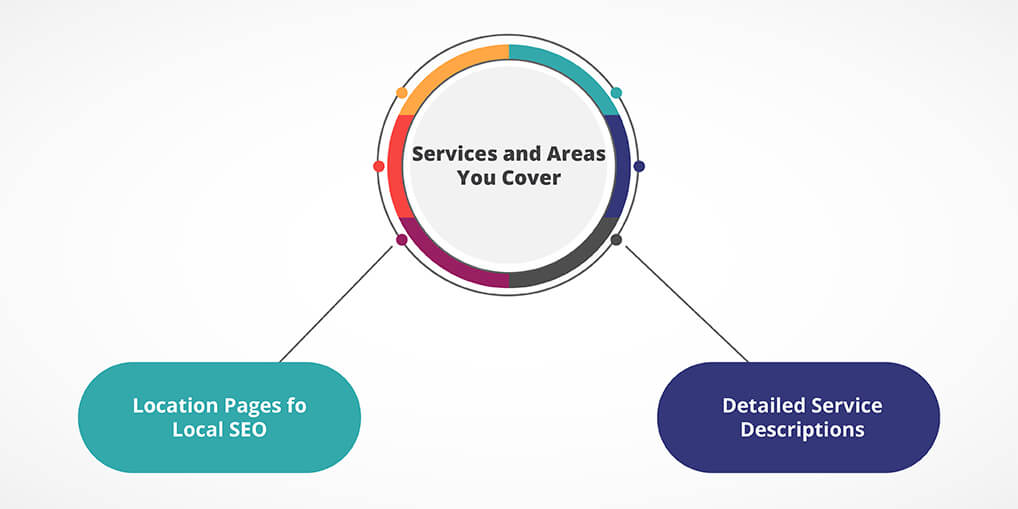
Location Pages for Local SEO
One of the effective SEO practices for homebuilders is creating individual landing pages for every location and neighbourhood in which your service is available. Therefore, when anyone searches for homebuilders with a specific location name, these pages will be displayed. These location pages should include:
- A brief description of the area/location
- Types of homes you build at that location
- Testimonials from local clients
- Models or communities in the area
- A contact CTA of that region
Do not copy and paste the content; instead, customize it for each location and provide relevant information to avoid penalties. Additionally, you can embed Google Maps to show where you build homes.
Detailed Service Descriptions
Describe exactly what you do and what services you are offering. Clarify some things like:
- Do you manage land acquisition?
- Do you work on client-owned lots?
- Do you offer custom home design?
- Do you deal with eco-friendly or green homes?
- Do you partner with Homeowners Association or developers?
Break down your services in a clear way and give each service a page with a strong CTA and supporting images and videos. Use real images instead of stock images to build trust and maintain authenticity.
8. Floor Plans and Home Models

Easy-to-Navigate Floor Plan Gallery
Design your floor plan page in an easy-to-use and interactive way. Users will go through all the options and compare them. Add filters so that they can find the perfect home that meets their specific needs.
Build a searchable gallery where users can filter by:
- Number of rooms
- Type of rooms
- Price range
- Square footage
- Style
Provide a clear layout plan for each floor and write a brief description of the design, including elaborate specifications and features. Add a “Save to favorites” or “Download brochure” option so that users can save their choices and make an informed decision. Do not forget to add CTA’s for every home you show.
Interactive Features and Downloads
Stand out from the competition by adding interactive floor plans. Allow users to access the rooms and navigate through them to view details or furniture layouts. Add PDFs with your brand, contact info, and CTA’s. Ensure that they are mobile-friendly.
Add walkthroughs and 360-degree images for an immersive user experience. The goal is to excite the users with the content you have and make them engage for a longer time.
9. Testimonials and Social Proof
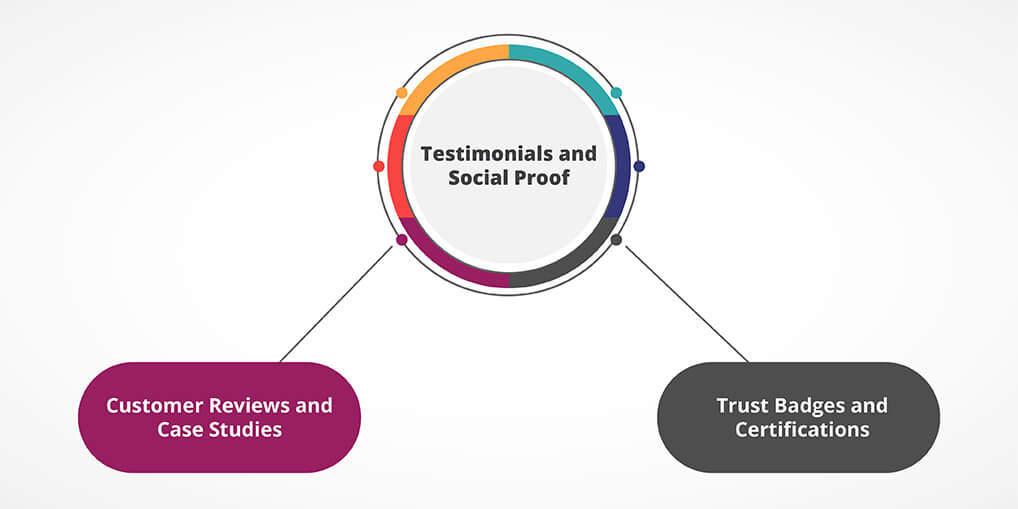
Customer Reviews and Case Studies
Social proof is crucial for your business to thrive and grow. If you show the clients what previous clients felt, they are more likely to trust you with their biggest investment. Display reviews and testimonials on your homepage and service pages, as well as near the CTAs. Include:
- The customer’s name and location
- A photo of the customer with his permission
- Highlighting what they loved
- Links to full case studies or videos, if available
Case studies are effective in conveying the exact experience of the client: the problem, how it was solved, and the final result.
Trust Badges and Certifications
Apart from testimonials, build credibility with badges like:
- BBB accreditation
- Energy Star certifications
- Home Builder Association membership
- “Best of Houzz” or other awards
Display these near lead forms or CTAs to demonstrate that you are a professional, legitimate, and reputable organization.
10. Lead Capture Tools
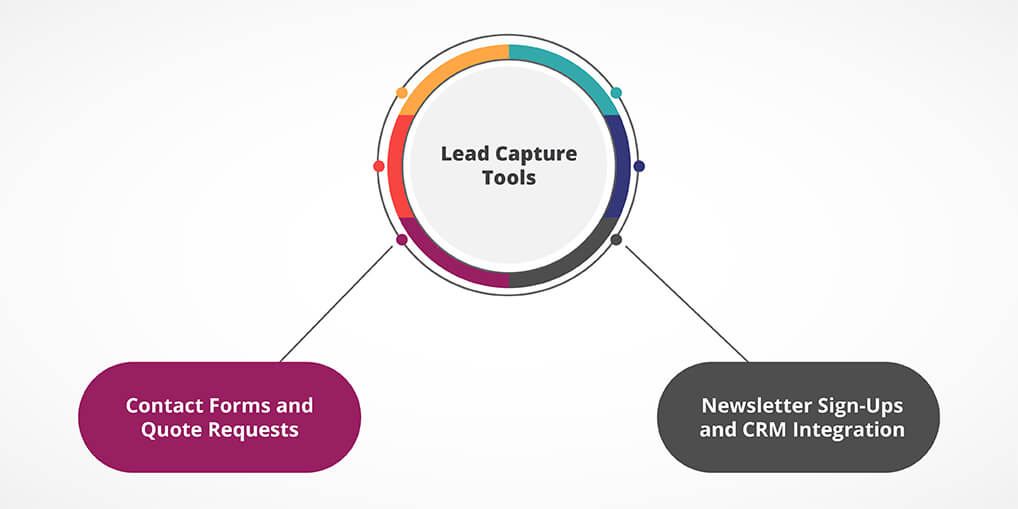
Contact Forms and Quote Requests
For any kind of website, the main goal is to generate leads. So, leverage forms to get leads that are simple and visible at the right places.
Avoid long forms and ask for only:
- Name
- Phone number
- Preferred model
- Message
Maintain a simple and clean design. Place forms at the bottom of every service page and in sidebars. Utilize smart forms that remember returning users to boost conversions.
Newsletter Sign-Ups and CRM Integration
Email marketing remains an effective marketing strategy despite the emergence of other marketing opportunities. Give them a reason to subscribe. Offer them access to special promotions, a homebuyer guide, or community updates.
Make sign-up forms unobtrusive but noticeable. Use pop-ups wisely: trigger them on exit intent or after a specified time on the website, rather than immediately upon arrival. Connect your forms to a CRM to efficiently organize, nurture, and follow up with leads.
11. Blog and Educational Resources
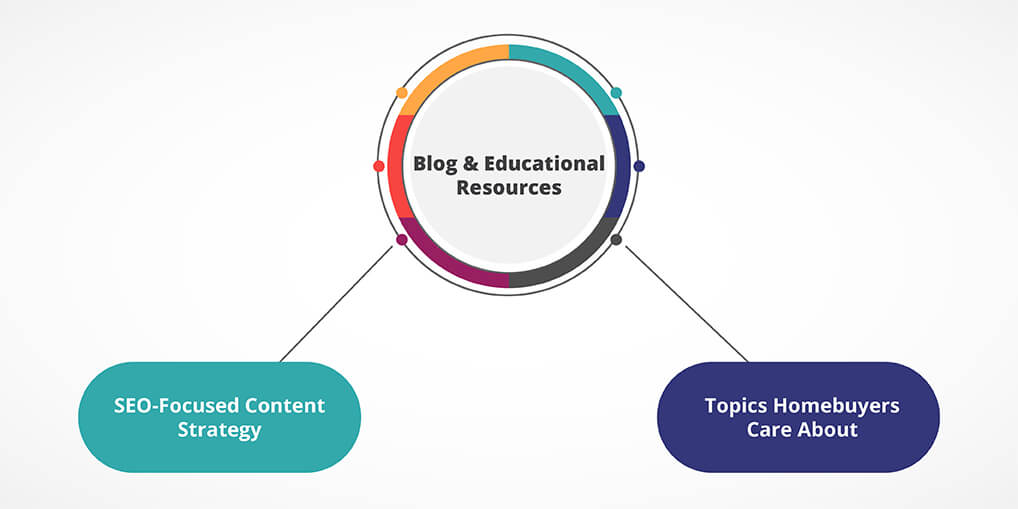
SEO-Focused Content Strategy
A blog plays a major role in SEO strategy. Publishing articles creates a new opportunity to rank on Google. You can answer potential customers’ questions and build trust with them. For homebuilders, this is creating content for first-time and experienced buyers.
Leverage tools like SEMrush or Ubersuggest to find longtail keywords which customers are searching for, like:
- “Top home builders in [your city]”
- “Best time to buy a new construction home”
- “Steps to building a custom home”
Write blogs in detail by considering those keywords. Maintain a friendly tone and write informative, action-oriented content that is engaging and effective. Use internal links to direct the users to specific pages and CTA’s for lead generation.
Topics Homebuyers Care About
What should you write about? Focus on the real questions and concerns your buyers have. Below are some of the high-performing content ideas:
- How to Finance a New Home Build
- Mistakes to Avoid When Choosing a Builder
- What to Expect During the Construction Process
- Trends in Home Design
- Why Energy-Efficient Homes Are Worth the Investment
Utilize high-quality images, infographics, and videos in your blog posts to enhance time on page and improve SEO.
12. SEO and Site Speed Optimization
Keyword Integration and Metadata
SEO is important for any website to rank in Google. For this, you need to use strategic keywords in your website:
- Page titles
- H1 and H2 tags
- Meta descriptions
- Image alt text
- URL slugs
- Body content
First, write clear and understandable content for people; later, you can optimize it for search engines. Tools like Yoast SEO or RankMath can help you with the on-page optimization part without compromising the natural flow of your writing.
Image Optimization and Caching
Large, uncompressed images can reduce a website’s speed. Even a one-second delay in site speed has a 7% possibility of decreasing the conversion rate. Speed up your site by:
- Choose a fast, reliable hosting provider
- Compress images using tools like TinyPNG
- Use lazy loading to delay image loading
- Enable caching to reduce load times for repeat visitors
Use a CDN like Cloudflare for faster content delivery. A website is not only about user experience, but Google considers faster websites in its ranking algorithms, which affects the SEO.
13. Strong Call-to-Actions (CTA’s)
Clear and Actionable CTA’s
Your CTA’s are the link between browsing and buying. Great CTA’s tell people exactly what to do and what they will get from them. If they are invisible or unclear, you will lose business. Include CTA’s like:
- “Schedule a Free Design Consultation”
- “Explore Floor Plans”
- “Get Pre-Approved Now”
- “Start Your Build Journey Today”
Avoid routine terms like “Click Here.” Instead, focus on value and urgency.
Each page should include at least one clear CTA, preferably above the fold and near the bottom of the content.
Placement and Design Tips
Placement of CTA’s is as important as the content. They should be easily visible. Include bold colours, large buttons, and whitespace to make them visible. Also:
- Repeat important CTAs in long pages wherever required
- Use sticky CTAs that follow the user
- Place CTAs near decision points near testimonials, floor plans, or after service description, etc.,
Test different CTA’s and see which one performs the best for conversions. Small differences can lead to big conversions.
14. Analytics and Performance Tracking
Tools to Monitor Site Metrics
You cannot make any improvements on the aspects that you do not measure. Track your website metrics by setting up an analytics tool and tracking the users’ activity on your website.
At a minimum, install:
- Google Analytics: Tracks traffic, behavior, conversions
- Google Search Console: Shows search performance and technical issues
- Hotjar or Crazy Egg: Offers heatmaps and user session recordings
Use these insights and make changes to your website. Data-driven decisions can lead to improved ROI and a better user experience.
Conversion Rate Optimization
Once traffic starts coming to your site, convert it into leads. Make small adjustments to enhance phone calls, submissions, and responses to schedule a tour.
Observe analytics to identify:
- High-traffic pages with low conversion
- Devices or browsers with performance issues
- Drop-off points in multi-step forms
Then test fixes like:
- Shortening forms
- Improving headlines
- Adding trust elements
- Speeding up load times
15. Legal Pages and Compliance
Privacy Policy, Terms, and ADA Compliance
Your website should be legally compliant, especially if it collects sensitive data, such as through cookies or forms. This means the website should have
- A Privacy Policy explaining what data you collect and how it’s used
- Terms of Use that protect your content and clarify user expectations
- A Cookie Consent banner if you’re tracking users
For ADA compliance, make sure your website is accessible to users with disabilities. That includes:
- Proper contrast ratios for text
- Keyboard navigability
- Alt text on all images
- Screen reader compatibility
Audit your site for accessibility by using tools like WAVE or accessible.
SSL Certificates and Data Protection
Security is crucial for your website, and if it displays “Not secure” after access, there is a high chance that potential customers will bounce back. Have an SSL certificate, which encrypts data and builds trust.
Ensure that the customer data is safe with you. Utilize encrypted databases, secure CRM systems, and regularly monitor your networks for potential breaches. If there are any signs of a data breach, inform your users in a legally compliant manner. So, it is better to prevent the issue before it even starts. Maintaining the user data safely builds trust and protects your business.
FAQs
1. How often should I update my homebuilder website?
You should revisit your website at least quarterly. Update your content with new projects, testimonials, blog posts, and community info. Refresh your design every 2–3 years to keep up with modern standards and maintain credibility.
2. What’s the best platform for a homebuilder website?
WordPress is a popular choice due to its flexibility, extensive plugin library, and robust SEO features. However, Webflow offers modern design capabilities without code, while Squarespace is ideal for beginners. Select a platform that aligns with your technical skills, business size, and customization requirements.
3. How do I improve conversion rates on my website?
Focus on clear CTAs, fast load times, trust-building testimonials, and simplified lead forms. Utilize tools such as heatmaps and A/B testing to identify and resolve friction points. Always ensure your value proposition is front and center.
4. Should I hire a designer or DIY my homebuilder website?
If you have design experience and a limited budget, DIY may be a viable option using platforms like Wix or Squarespace. However, for professional results and long-term ROI, hiring a designer or agency with experience in homebuilding is often a smart investment.
5. Can a website help me get more local clients?
Absolutely. By optimizing for local SEO (location pages, Google Maps, and blog content), your website becomes a powerful tool to attract nearby buyers searching for homebuilders in your area. Ensure your contact information is consistent across all platforms and submit your site to local directories.
Conclusion
Designing a builder website that is both highly converting and visually appealing is a crucial factor in business success. In this fast-paced world, a website creates a first impression with potential customers. Therefore, every aspect of it matters greatly. By following the checklist as mentioned above, your website can stand out in this competitive market. If you are a builder looking to build a website for your business, we are here for you! At Ayatas Technologies, we have experts who design stunning and high-converting websites tailored for homebuilders. From sleek visuals and smart navigation to SEO-friendly content and lead-generating tools, we help you turn visitors into buyers. Contact us today for a free quote!